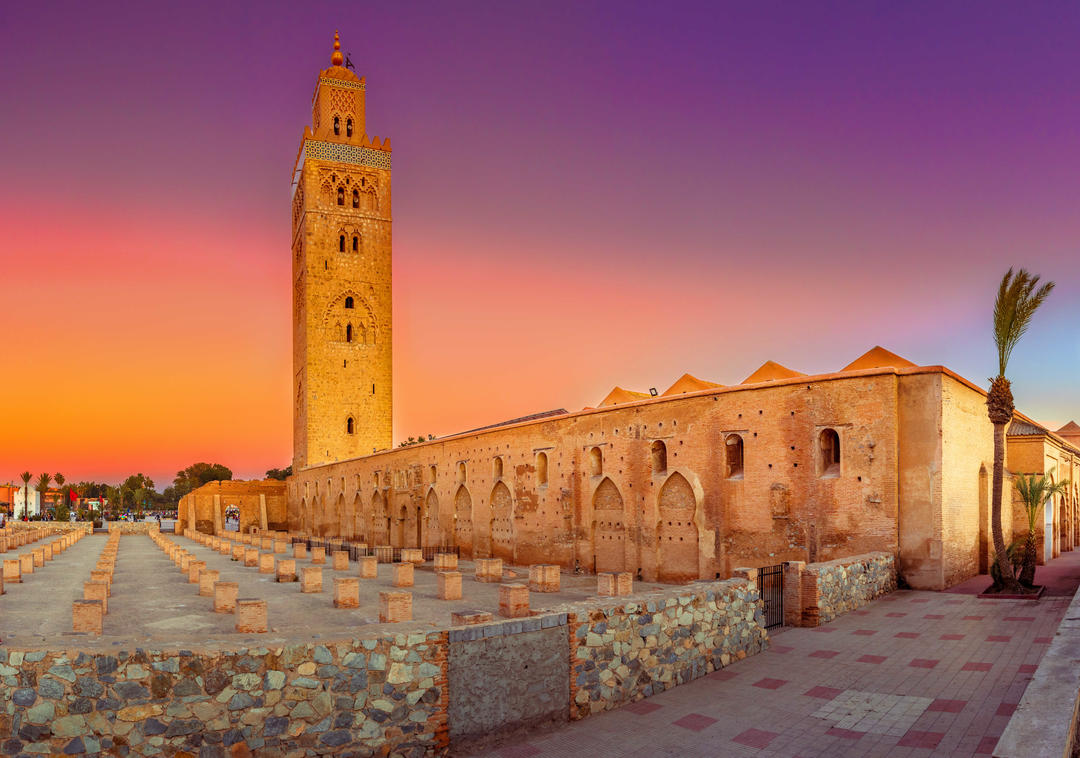
La mosquée Koutoubia, qui se dresse gracieusement près de la place Jemaa el-Fnaa, est l’un des monuments les plus emblématiques de Marrakech et un chef-d’œuvre de l’architecture almohade. Son minaret majestueux de 77 mètres, visible depuis différents coins de la médina, est depuis des siècles un phare spirituel et culturel. La mosquée reste un lieu de culte actif et un symbole du riche héritage islamique de la ville.
Importance architecturale
La mosquée Koutoubia représente le plus bel exemple de l’artisanat marocain du XIIe siècle :
- L’excellence du design almohade : lignes géométriques épurées, sculptures sur pierre complexes et proportions harmonieuses.
- La tour du minaret : ornée de motifs traditionnels et surmontée de quatre boules dorées qui scintillent au lever et au coucher du soleil.
- Influence sur l’architecture mondiale : son style architectural a inspiré des chefs-d’œuvre tels que la tour Giralda à Séville et la tour Hassan à Rabat.
- Si l’intérieur est réservé aux fidèles musulmans, les visiteurs peuvent admirer la grandeur de la mosquée depuis les jardins et les esplanades environnants.
Les paisibles jardins de la Koutoubia
La mosquée est entourée d’espaces verts magnifiquement aménagés qui offrent une escapade sereine loin de l’agitation de la médina.
- Le parc Lalla Hasna – des allées bordées de palmiers, des fontaines, des jardins fleuris et des pelouses impeccablement entretenues, parfaits pour se détendre et prendre des photos.
- Des sentiers pédestres – idéaux pour les promenades matinales ou pour admirer le coucher de soleil avec la silhouette de la mosquée en arrière-plan.
- Espaces adaptés aux familles : des zones ombragées et des bancs permettent aux visiteurs de profiter de la tranquillité des jardins.
- Ces jardins offrent l’un des meilleurs points de vue pour immortaliser le minaret de la mosquée se découpant sur le ciel de Marrakech.
Contexte historique et culturel
Construite à la fin des années 1100 sous le règne du calife Yaqub al-Mansur, la Koutoubia était le cœur spirituel de l’empire almohade.
- Son nom, « Koutoubia », vient du mot arabe al-koutoubiyyin, qui signifie « les libraires », car le quartier abritait autrefois un marché animé de vendeurs de manuscrits.
- Au fil des siècles, la mosquée est restée un symbole de savoir, de culture et de dévotion religieuse.
- Elle reste l’un des édifices les plus photographiés et les plus appréciés du Maroc.
Les environs
La mosquée se trouve au carrefour de certains des quartiers les plus importants de Marrakech. À voir à proximité :
- Jemaa el-Fnaa (à 5 minutes à pied) – la place animée connue pour ses stands de nourriture, ses artistes, ses marchés et ses activités culturelles.
- Avenue Mohammed V – un grand boulevard menant vers la ville moderne (Gueliz) avec ses boutiques et ses cafés.
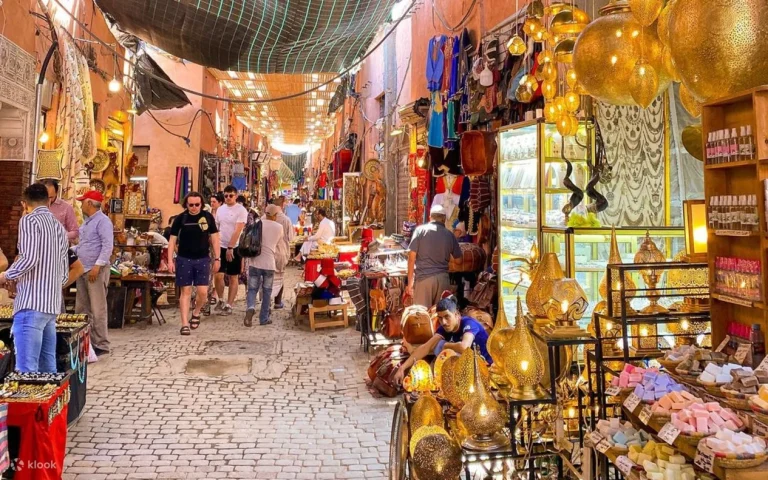
- Souks de la médina – découvrez les artisans, les articles en cuir, les épices, les lanternes et l’artisanat.
- Quartier du palais royal – remparts historiques et architecture traditionnelle dans le quartier de la Kasbah.
Ambiance
- Calme et spirituelle tôt le matin.
- Animée mais paisible en soirée, lorsque les habitants se retrouvent dans les jardins.
- L’un des quartiers les plus sûrs et les plus agréables pour les piétons du centre de Marrakech.
Conseils aux visiteurs
- Habillez-vous modestement lorsque vous vous promenez dans les environs de la mosquée.
- Les photos sont autorisées à l’extérieur, mais déconseillées pendant les heures de prière.
- Les jardins sont ouverts au public et l’entrée est gratuite.
- Pour profiter d’une vue panoramique, marchez un peu plus loin vers le côté sud-ouest de la mosquée.